Level Up: Never Let Yesterday’s Success Limit Tomorrow’s Potential
One of the greatest dangers in life is arriving at a place where you become so satisfied with what you have achieved that you lose sight of what you are still capable of becoming. In Philippians 3:7–8, the Apostle Paul declares that whatever things were gain to him, he counted as loss for the excellency of the knowledge of Christ. What makes this statement remarkable is that Paul was not only willing to count his losses as nothing; he was also willing to count his gains as nothing when compared to the greater purpose he was pursuing. He understood that yesterday’s achievements could never become the ultimate standard for tomorrow’s pursuit. In Philippians 3:12, he further declares, “Not as though I had already attained, either were already perfect: but I follow after.” Here was a man who had preached the gospel, established churches, encountered God, and received tremendous revelations, yet he refused to believe that he had arrived. Paul understood that there was still more to apprehend, more to discover, and more to accomplish.
The challenge with many people is that they become fulfilled too early. They achieve something significant, reach a particular level of success, or experience a season of increase, and suddenly that achievement becomes the ceiling of their ambition. They begin to live in the comfort of what they have already accomplished rather than pursue the potential that remains within them. The danger is not necessarily success itself, but the satisfaction that blinds us to our weaknesses, our limitations, and the changes we still need to make. When yesterday’s victories become our standard, we can lose the hunger that brought us to where we are. This is why Paul says in 1 Corinthians 9:27 that he disciplines his body lest, having preached to others, he himself should become disqualified. He recognised that ministering to others did not exempt him from the responsibility of examining his own life. You can help others grow and still have areas in which you need to grow yourself. You can be celebrated by people and still need correction. You can have a remarkable testimony and still have unfinished work.
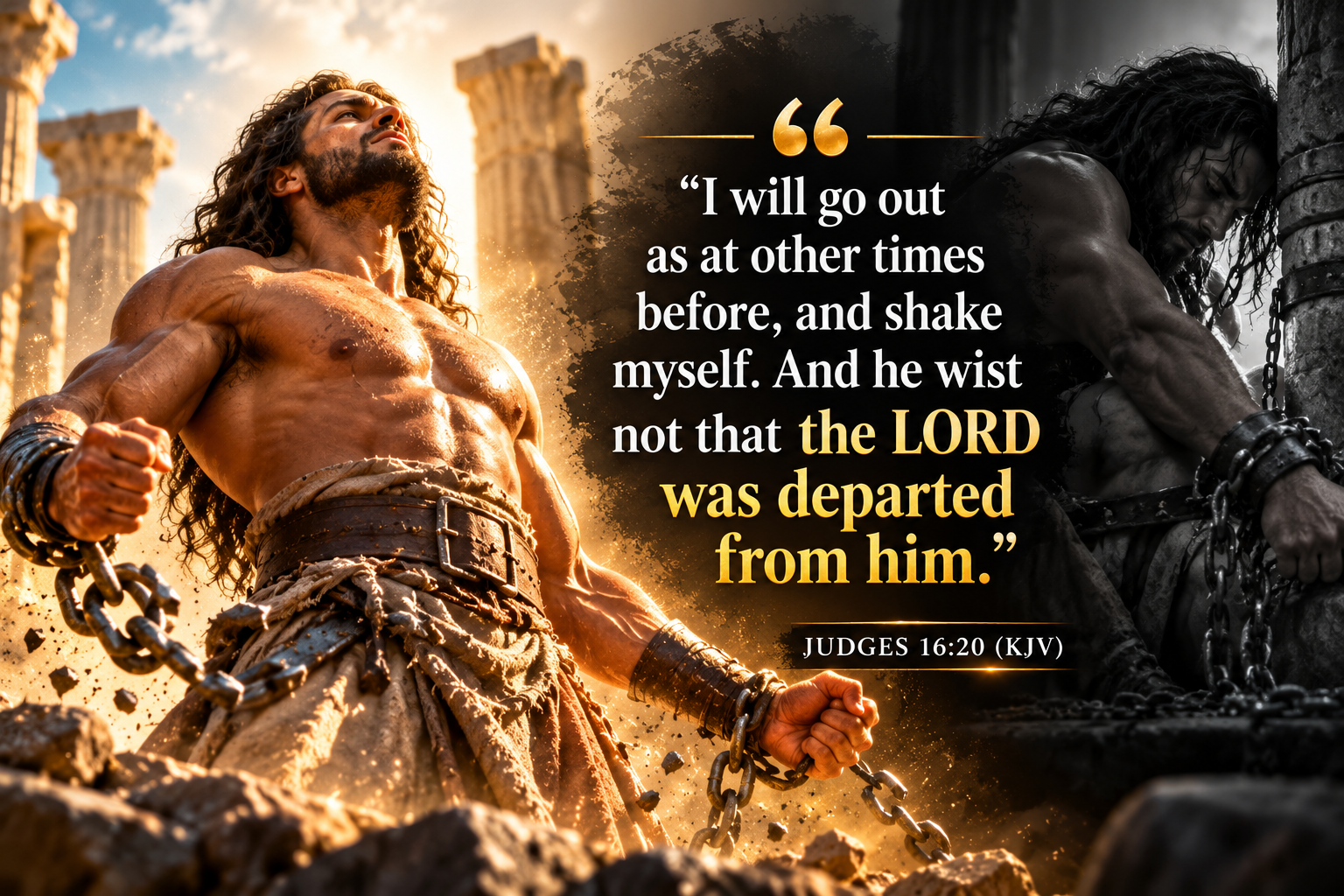
Consider the story of Samson, a man who carried extraordinary strength but eventually became vulnerable because he failed to recognise the danger of his own choices. His previous victories did not guarantee his future security. In Judges 16:20, Samson said, “I will go out as at other times before, and shake myself. And he wist not that the LORD was departed from him.” What a sobering statement! He assumed that what had worked before would work again, but he failed to recognise that something had changed. Solomon, too, was given extraordinary wisdom, yet his later decisions reveal that possessing wisdom does not automatically mean we will consistently exercise it. The prodigal son presents another dimension of this challenge. In Luke 15:11–32, the young man understood that an inheritance belonged to him, but he lacked the maturity to manage it wisely. Having access to an inheritance is not the same as possessing the wisdom required to preserve and multiply it. These accounts remind us that gifts, opportunities, past victories, and present advantages must never become substitutes for growth, discipline, and continued dependence on God.
The Word of God presents a different picture of the life we should pursue. Proverbs 4:18 declares, “But the path of the just is as the shining light, that shineth more and more unto the perfect day.” The picture is one of increasing brightness, not diminishing hunger. Our lives should reflect a willingness to mature, learn, improve, and become more effective in fulfilling God's purposes. There are still books that need to be written, ideas that need to be developed, people who need to be reached, ministries that need to be strengthened, and assignments that remain unfinished. There are dimensions of your potential that you have not yet explored simply because you have become comfortable with what you already know. The question is not merely what have you achieved, but what remains possible through the grace God has given you? Your current position may be evidence of progress, but it should not become an excuse to abandon pursuit.
Even Abraham, the father of faith, died without seeing the complete fulfilment of everything he had been promised. Hebrews 11:13 says that these patriarchs “all died in faith, not having received the promises, but having seen them afar off.” Their lives teach us that the journey of faith is often larger than one lifetime. We may accomplish much without exhausting the possibilities of what God intends to do through our obedience. Therefore, do not confuse progress with completion or applause with fulfilment. As Paul declares in Philippians 3:13–14, he forgot what was behind, reached forward to what was ahead, and pressed towards the mark for the prize of the high calling of God in Christ Jesus. Count your past failures as lessons, and refuse to let your past successes become limitations. Celebrate your progress, but remain teachable. Appreciate where you are, but recognise where you still need to grow. You have not yet exhausted your potential, and you must never allow the success of yesterday to become the limitation of tomorrow. Level up, press on, and keep pursuing the fullness of what God has called you to accomplish.